How to Build a Corporate Website That Actually Works

A corporate website represents your company to all of its audiences. It can attract new clients and partners, help with hiring, collect feedback, answer questions, and even become a full-fledged eCommerce platform.
Every day, new D2C (direct-to-consumer) brands emerge,
selling products directly through their websites without any third-party retailers. This means the site has to serve a wide range of purposes.
Your brand image matters more than ever.
The better the UX and design, the more trust your business will inspire.
At Once Agency, we consider the corporate website one of the most important marketing tools. It’s the foundation for telling your brand story, growing, and connecting with your audience.
Top 3 Challenges When Building a Corporate Website
You’ll need a full team of specialists.
Corporate websites are often large and complex. They take significant time and resources to build.
The traditional approach? Hire a marketer for structure, a designer for the UI, choose a CMS, bring in developers, and then manage the whole process. It’s slow, expensive, and inefficient.
Expectations vs. Reality.
With classic development methods, the result rarely matches the initial vision. Deadlines often slip. Even when there are logical explanations, the client’s frustration is real: “Why did I pay so much for something that’s not perfect?”
Low flexibility and difficult edits.
Most corporate sites aren’t easily adaptable. Minor updates can take weeks and require the whole team again. That’s why many companies avoid making changes altogether.
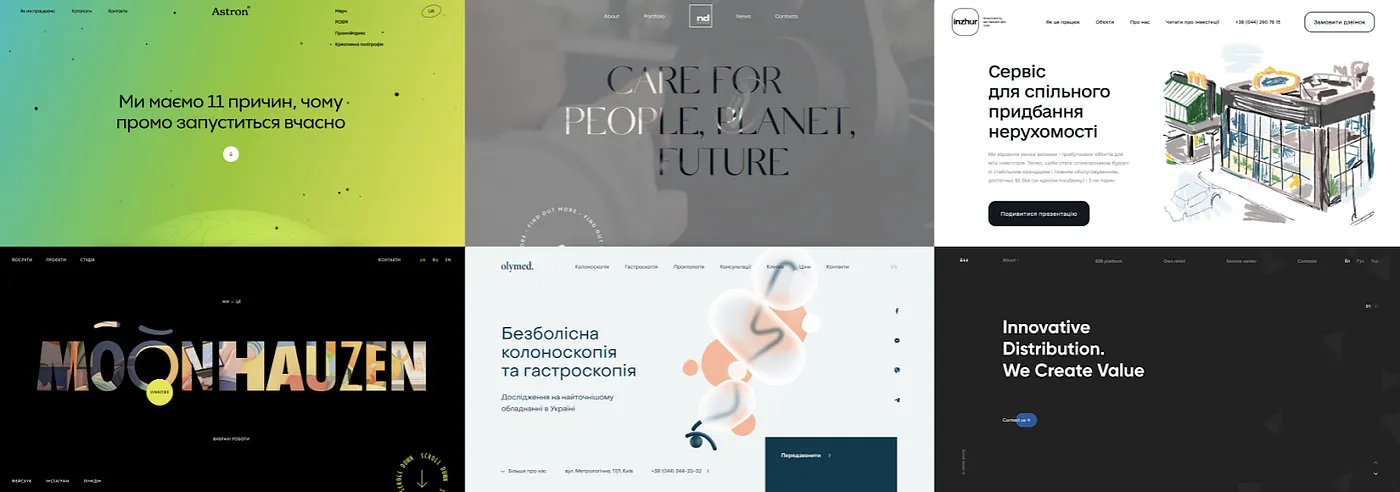
Sure, there are templates and free CMS tools. But if you want your site to add real value and stand out — it has to look and feel unique, modern, and polished.
Quick-fix templates or DIY CMS hacks won’t cut it.
They usually look generic and soulless. Maybe that’s fine for some — but is it fine for your brand?
A Corporate Website Isn’t a Problem — It’s an Opportunity
Your site should be an asset, not a technical headache or burden.
More and more businesses want to move fast, test ideas easily, and have flexible tools to grow. That’s absolutely possible.
Today, there are better ways to build websites. You no longer need a full dev team just to make a simple update.
These new tools are changing the game. Here’s what we use.

Smart Website Platforms We Use at Once Agency
Ми в Once Agency використовуємо розумні платформи для розробки сайтів, зокрема, корпоративних:
Webflow Development
Webflow lets us design and launch powerful websites without code. Whether it’s a landing page, a multi-page corporate site, or a light eCommerce platform — we build it fast and predictably with beautiful animations and layouts.
Strapi Development
Strapi is a headless, cloud-based CMS that enables fully custom, scalable sites without the need for backend developers. It supports JavaScript and open-source code, making it ideal for dynamic projects on any digital platform.
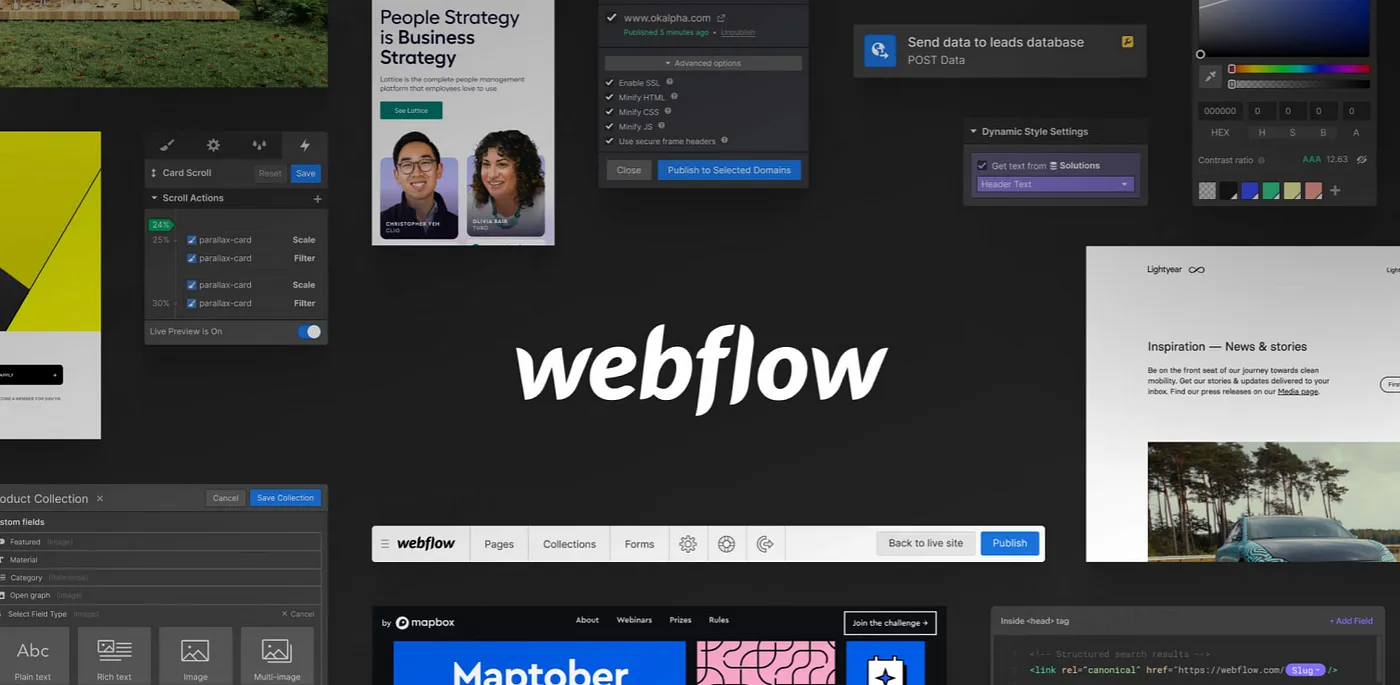
Webflow Benefits for Corporate Websites
Full design control.
Webflow gives designers complete visual freedom and control over layout. The intuitive editor makes it easy to update or add content on the fly.
A site that stands out.
You can create any design you want without code. Webflow lets you use the power of HTML/CSS/JS in a visual editor.
Clean code — without writing any.
Webflow generates clean, production-ready code with no unnecessary fluff. You’d never guess it wasn’t hand-coded.
Faster marketing cycles.
Want to test a hypothesis? Make a change? No devs needed. Webflow empowers marketers to move fast.
Empowered marketing teams.
No more waiting on engineers. Designers and marketers can launch, optimize, and experiment — and see results instantly.
Creative freedom for designers.
Pixel-perfect designs, exactly as intended. Designers work in a visual interface and get real, working websites — no translation or compromises.
Security and scalability.
Webflow is cloud-based and decentralized, meaning strong security and uptime. It’s protected from DDoS attacks and has built-in backups, SOC-2 compliance, SSO, SSL — the works.
SEO-ready out of the box.
Webflow supports everything from OpenGraph tags and metadata to custom code, canonical URLs, and advanced SEO tools like robots.txt and sitemap.xml.
Top-tier performance.
With Fastly CDN and Amazon servers, Webflow sites load incredibly fast. You can score 80–99 in Google PageSpeed Insights without jumping through hoops.
Integrations made easy.
Webflow integrates with services like Google Analytics, Zapier, Intercom, Mailchimp, Salesforce, and more.
Want to learn more? Check out our article: “Why We Fell in Love with Webflow and Ditched the Competition.“
Strapi: The Complex Site Solution That’s Surprisingly Simple
Strapi is a headless CMS. In short, it’s a content management system built around APIs — no frontend included.
This means you can connect Strapi to any frontend, in any language or framework. And it can power multiple products — apps, websites, internal tools — from a single admin panel.
Strapi lets you do big things with minimal time and team size. In many cases, you only need one s
Why We Use Strapi
Centralized content, multi-platform output.
Build everything from static sites to mobile apps and full eCommerce platforms — all from one system.
Open-source and community-driven.
Built by developers in France, now supported by thousands on GitHub. The community is always improving it.
Flexible and adaptive.
Strapi includes a fast setup panel, intuitive content tools, role-based access controls, plugin systems, and built-in APIs.
Secure and private.
You host Strapi yourself. That means GDPR compliance, total control, and reduced attack risk.
One language, everywhere.
JavaScript is used across both frontend and backend.
Multi-database support.
Connect and manage multiple databases as needed.
Automatic backups.
Everything is stored in the cloud, and backups are made regularly.
Fast global CDN.
Thanks to a robust content delivery network, your projects stay quick and accessible worldwide.
Unlimited traffic handling.
API requests are lightning-fast and practically unlimited.
RESTful or GraphQL.
Strapi supports both, making it ideal for apps, websites, and even IoT devices.
Together, we’ve explored the main platforms we use and why. In the next article, we’ll dive into our internal design decision-making process — and how we consistently deliver creative, one-of-a-kind results.
Written by Yevhen Madenov.
UX Lead at Once Agency, Webflow Master, and Design System Nerd. Want to talk websites? Let’s connect.